
Advanced Therapy Techniques & Equipment
Specialized Equipment in Our Therapy Gym
To help shorten your recovery time and get you fully back to your life—expect the latest therapy techniques and advanced equipment from Harmony. We invite you to experience the optimal balance of wellness and peace of mind.
Advanced Therapy Techniques & Equipment
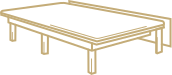
Hi-Low Mats
For practicing safe transfers, functional bed mobility, stretching, range of motion, and other manual techniques

Diathermy
Uses electromagnetic waves to increase circulation in the body’s tissues— which helps with soft tissue injuries, slow healing wounds, arthritis, scar tissue, and contractures

Electrical Stimulation
Stimulates nerves in the muscles to restore function, increase muscle strength, reduce pain, prevent falls, and help with joint replacement and orthopedic recovery

LiteGait Therapy
A gait training device that allows patients to work on walking while simultaneously controlling posture, weight bearing, and balance

OMNICYCLE™
Improves endurance through a motor-assisted cycling system for upper and lower extremities
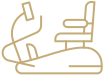
NuStep Recumbent Cross Trainer
Strengthens upper and lower body—and increases range of motion and endurance

Parallel Bars
Arm support to improve walking for short distances— and help with sit-to-stand skills, balance, weight shifting, and correct gait patterns

Speech Room
An ideal setting for working one-on-one with cognition and swallowing issues

Stair Trainer
Allows patients to practice using steps before returning home

SYNCHRONY DYSPHAGIA SOLUTIONS PROGRAM Uses biofeedback in the treatment of swallowing disorders—and helps patients “see” the swallow
Uses biofeedback in the treatment of swallowing disorders—and helps patients “see” the swallow